4 Workout Motivation Tips

Sometimes, you just don’t want to work out. Well, use these tips to provide workout motivation next time you are having trouble getting motivated to workout.

Here are some workout motivation tips!!

1) Change things up.

This is the easiest way to get motivated to workout. Just do something completely different from what you’re doing now. For example, if you do total body workouts, try doing an upper/lower split, or vice versa. If you’re doing bodybuilding splits, then change to total body workouts.

Another example: train in a different rep range. If you train in the typical 8-12 rep range, try lifting in the 5-6 range for a change of pace (no, ladies, this will not make you big and bulky). If you do primarily dumbbell and barbell exercises, switch to a bodyweight only workout. The key here is to completely change your routine. Get creative if you want, just come up with something that gets you excited and motivated to work out again.

2) Set a goal.

This is my favorite method for finding workout motivation. As an example, you could set a date to compete in a local powerlifting event, race, or other competition. Maybe you want to run faster, jump higher, lift a certain amount of weight. Just set a performance goal, set a deadline, and schedule your training accordingly. Having an end goal in mind is a great way to keep you motivated and excited to get into the gym.

3) Workout with a partner.

If you train alone, you may want to find someone to workout with. Warning: train with someone who will be consistent and is positive and encouraging. The last thing you want to do is get a workout partner who is constantly negative or will make excuses not to go to the gym on a consistent basis. A great workout partner can encourage you, motivate you, provide social support, and help push you to improve your performance.

4) Hire a personal trainer.

Some people simply won’t go to the gym unless they know they are paying someone who will be waiting on them. That is one of the main reasons people hire me. Warning: do your homework before hiring a trainer. Most trainers don’t truly know what they’re doing. Ask questions about their experience, certifications, and ask for client referrals. If they are hesitant to give you any information, walk away and save your time and money.

Oh, one more thing. Here’s an easy test: tell them you are interested in losing fat quickly. If they recommend anything other than a total body or upper/lower split (and they tell you to do a lot of long, slow cardio), they don’t have a clue what they are doing. Get away . . . fast.

Workout Motivation

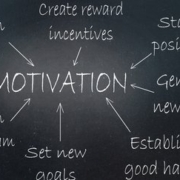
How do we find the motivation to exercise? At the end of the day when that big fluffy couch seems to be calling your name and nothing looks more appealing, what is it that keeps us on track and motivated?

What Motivates Me To Workout

The question came up today how do I motivate the individual and I started thinking about how do I motivate myself. Everyone is different and everyone needs motivation served to them on a different platter. What motivates one doesn’t necessarily motivate the next. Some people need constant encouragement, others need a kick in the ass while some need to be told specifically what to do.

There are literally hundreds of different ways to motivate yourself to exercise and I will give you a few examples of what has worked for me. Even I struggle sometimes to keep going but the most effective way to keep motivated for me is having a workout partner. Having that buddy on the same page as you challenging you to push hard and keep going always motivates me. I have had some great workout partners in the past and I miss training with them.

Writing down my program and keeping track of it is also a great method for me. I track my results and week by week I check to see my improvements, and hey what better motivation is there then seeing results.

Caloric expenditure is one that has worked for me in the past as well. I know that you read tons of weight loss articles and they say don’t count calories. Well, how are you going to get the proper amount of calories you need and burn the proper amount without keeping track? Knowing what I need to burn in the day pushes me that extra little bit or keeps me on track so I don’t expend too much.

Simple enjoyment out of exercise and having fun will keep anyone going. I wish I could workout with everyone I train all day every day. If it wasn’t for the fact that it takes away my concentration on the individual I would love to work out with them all. Having fun doing a group or boot camp class has always been motivating for me. Lately, I have been riding my new mountain bike and I love it. Doing something that keeps you moving while you are having fun can’t be bad for you.

Magazines and the models inside have been an inspiration in the past for me. Sure Photoshop works some wonders and they are usually a couple of days out from contest time but hey working hard to be that fit and having a goal is a great motivation.

Internet articles, blogs, books any type of information and reading material is interesting for me and gets me to try new things or methods and different exercises. Sometimes reading what others have done and their success stories are very inspirational.

Setting goals and when you reach them to reward yourself. It’s always nice to get to a goal and it’s even nicer to know that you are getting something for your hard work. I like to get some sort of little reward for every goal I achieve. Set your goals and set your rewards and get them often.

Keeping my “lean clothes” around makes me work hard to fit into them and want to look good. With looking good comes feeling good and having those outfits I feel stellar in keeps me on track.

Stress relief is a great motivator for me. Some days I need to blow off some steam and putting some old classic tunes on my iPod and just tearing it up in the gym really clears my mind and drains the stress from my body and mind.

Clearing my head while I have been riding my bike has worked great as well. Again it’s stress relief buy it really gives me time to think about other things and maybe just take in some scenery.

A couple of other motivators that may work for you could be signing up for a 5 or 10 km race, not feeling bad from missing workouts, extending your life expectancy and being able to run and play with your grandkids one day. Weighing yourself and keep measurements. Not every day but once a week, trust me as you see the numbers going down you will be motivated.

However, you chose to motivate yourself whether it be from taking those measurements, logging your workouts or reading motivational quotes, the feeling you get once you have reached a goal and people are noticing is priceless. Make and set your goals so they are achievable and realistic. You will reach them as long as you work at it and there is no better reward than feeling great and looking great and having others notice.

What Motivates you? I’d love to know…

Common Mistakes Most People Make When Working Out

If you want to learn about 3 major dumb mistakes people make when working out, then you’ll want to read this article. Specifically, I’ll discuss how people are wrongly expecting instant results, unproductive inconsistency, and erroneously missing the diet equation.

After reading this article, you should be able to see better workout results and more importantly, have increased workout motivation.

Most people who are starting to workout have an illusion of grandeur, wanting to look like supermodels in a week’s time. This is one of the mistakes people make, thinking that working out for a couple of hours for a few days should make them lose at least a third of their weight. This is too much of an expectation that not even God can perform a miracle. Dumb mistake number one, don’t expect instant results! Miracles do happen but not on weight issues, these you need to work hard for. Set attainable goals and work hard for each goal. Plan each step, each activity and make sure you follow your plans or this will lead you to mistake number two.

You have been sticking to your workout – getting in shape, doing more push-ups, gradually increasing running speed – until after one week you lose your workout motivation and decide to skip a day or two. Guess what? Unproductive inconsistency will pull you back in your workout and might cause it to fail. Another dumb mistake, stop being inconsistent! Stick to your routine no matter how heavy a rainy day it is or you will pay the price. Don’t expect good results when you know you have been skipping workouts.

The third dumb mistake people make when working out is missing the most important part – eating right. It is never enough to just exercise without eating healthy foods. Stick to what you know is right for your workout. Don’t tire yourself for 3 hours in the gym then eat a heavy and sinful dinner afterward. You may be working out consistently but at the same time consistently pigging out on pizzas and buckets of ice cream as well. Dumb mistake number three, don’t forget your diet!

Following a Dietician’s expert advice on what kind of diet to take coupled with good, consistent workouts will give out the best results. Remember, don’t make dumb mistakes such as expecting instant results, being inconsistent, and forgetting your diet. These will surely set you up for a failed workout. Avoid these mistakes and you’re sure to notice fewer pounds, fewer inches, and more workout motivation.

What Can Functional Fitness Do For You?

Functional fitness is a type of work out that concentrates specifically on training your body to cope with real-life situations using real-life body mechanics. This revolutionary technique takes fitness to a whole new level by combining multiple muscle groups and joint movements to work together rather than isolating them to function separately.

Working out on the machines is terrific; however, the machines don’t prepare you for everyday life. A patient, Laura came to me after a back injury and said, “I don’t understand, I went to the gym 3 times a week and felt much stronger, yet when I went on my trip and had to carry my suitcase by myself, I hurt my back. How could that be? That’s because exercising on a machine and performing functional exercise is quite different. Here’s why…

What is functional fitness

EXAMPLE OF FUNCTIONAL FITNESS EXERCISE:

Tricep extensions performed with dumbbells on a bench is a functional fitness exercise. A seated tricep extension performed on a machine is not. Exercises performed on either a bench or without the use of machines integrates muscles of the back, shoulders, arms, and legs to stabilize your body making the exercise dynamic, meaning your body is in motion. When comparing this dynamic exercise to an occupational therapist bending over to transfer a patient, or a person putting away groceries, they are similar because both functional activities require the person to use a variety of muscles.

However, if you do a seated tricep extension on a machine that isolates the tricep muscle, guess what is doing the work? The machine does most of the work and that movement doesn’t mimic real-life activities. Because in real life, when you’re carrying suitcases, bending over to retrieve something, reaching into your closet, you don’t just use one muscle group to perform functional activities.

That’s why you can train at the gym for months and even years on the machine and one day you go to put groceries in the car and ouch – you strained your back!

Machine-based exercises also limit your range of motion and therefore don’t allow your body full range of movement that is required of you when doing day to day activities.

In this tough economy there is a multitude of reasons for you to incorporate functional fitness into your exercise routine:

Benefits Include:

  • No expensive equipment.
  • Decrease back pain, shoulder pain, neck pain
  • Decrease risk of injury o Enhance joint mobility
  • Keeps you doing all the things you love and need to do
  • Can be done by virtually anyone, regardless of fitness level

How Functional Fitness Benefits Seniors

Functional fitness is all about teaching your body to handle real-life activities. It is a way of exercising that helps your body be strong in those areas that the body needs to be strong in your everyday life. This type of fitness can benefit anyone but can benefit seniors perhaps more than others.

The Idea Of Functional Fitness For Seniors

Functional Fitness for Seniors

Functional fitness involves putting your body through the paces that are necessary for everyday life. As a senior, you can lift weights or use a weight lifting machine to strengthen certain muscles of your body to the exclusion of others and may find that you are strengthening certain muscles, which leaves a deficiency in others.

Without functional fitness, you can strengthen your arms in a biceps machine but still throw out your neck when reaching for something out of your reach or throw out your back while lifting your grandchild.

Seniors especially make the mistake of exercising their arms or legs in ways that may strengthen those muscles but avoid exercising their back, for example. This can lead to back trouble that could have been avoided if you had recognized that your arms and legs are intricately connected to your back and are useless without a strong core.

As a senior, you need to use all your muscles and joints in concert with one another and not just isolating out certain muscles to the exclusion of others.

Helping Your Muscles Work Together

Many seniors make the mistake of using weight machines or free weights while at the gym. They are isolating out certain muscle groups for strengthening, strengthening some muscles more than others. They may believe that to have a good biceps bulge is a sign of good health when their triceps muscles are not exercised at all. This means that the muscles cannot work together to do the everyday lifting and stretching that needs to be done as part of your regular day.

Everyday movement is not idealized. You don’t lift or move things by isolating out your muscle groups and in fact, it takes a strong back, strong legs, and strong-arm muscles to move a box or carry groceries. If you isolate out a muscle group to the exclusion of all others, you can set yourself up for injury to those muscles you have neglected.

How To Make Functional Exercise Work For You

Functional exercise is all about integration of muscle parts. It is about showing the muscles how to work together to accomplish a task rather than isolating muscle groups that may be exercised out of proportion to the rest of your muscles.

If you like rowing machines, for example, think about the posture you are in when you do that exercise. Your back is stiff and your arms are bent repeatedly with your legs doing very little. This strengthens some muscles and not others.

A better activity is to use a free weight standing up. First, you bend over and strengthen your back in picking up the weight. Then you strengthen your legs by holding the weight with your entire body. Finally, put the weight in various motions around your body so that your latissimus dorsi muscles are activated, along with your biceps and triceps muscles. Even the small muscles of your hands are strengthened by holding the weight.

All your muscles are working in concert by that simple exercise. If you repeat it on the other side of your body, the muscles of your back, sides, legs, and arms are exercised for the other side of your body and you haven’t missed any muscles in the process.

This type of exercise better mimics the regular activities you do every day and you will have fewer injuries because your muscles have learned to work in concert.

Balance And Control

Functional exercise is all about using your body to balance yourself while having control over your muscles. For seniors, it may mean skipping lifting weights completely and instead of working on things like squats and lunges that use all your muscles and help your balance. You don’t need bulging biceps to have good functional use of your body.

Can you stand on one foot for any amount of time without falling?

If you have questions about functional exercise, talk to a trainer about those exercises that will best mimic those things you are doing in everyday life. It is a different way to exercise that will keep you balanced, strong, and free of injury.

A Guide to Achieving Functional Fitness

Ever wondered why sometimes even the people who seem extremely healthy and physically fit backslide at performing an everyday task as small as lifting a toddler? The reason behind such anomalies is a lack of functional fitness.

Functional training deals with exercises and movements that help individuals cope with their daily life routines. Simply put, functional fitness exercises help you to perform some daily chores such as carrying groceries or walking up the staircase to the best of your ability without incurring an injury.

Benefits of functional fitness

As mentioned above, physical fitness and functional fitness cannot be used synonymously. Physical fitness does increase the chances of fitness but in no way guarantees it. This is why we sometimes see very well trained athletes succumbing to minor injuries after performing some day-to-day task.

The cross-co-ordination of the various joint and muscles in our daily routine requires us to undergo proper training in order to ensure that we are up to par in our everyday lives.

The emphasis of functional training is to develop the core muscles in order to help you optimize your daily productivity. These include the abdominal and lower back muscles. Whether you are a housewife or a busy professional with a sedentary lifestyle, some basic fitness exercises are all you need to make the most out of your day.

Where conventional weight training is about isolating the different muscles, functional training, on the other hand, is about the integration of various muscles to ensure their synchronization while performing a task that involves cross-muscular co-ordination.

Since our everyday routine involves the use of various joints and muscles, training exercises focus on improving multi-joint co-ordination. Keeping this in view, a functional fitness exercise might involve the elbows, spine, and shoulders altogether instead of just focusing on one joint or muscle.

When one embarks on the quest of fitness, he is simply expected to stand on his own feet in order to develop the capacity and control to carry his own body weight adequately. The subsequent stage involves moving on to some conventional weight training techniques.

Therefore, initial training exercises involve the one-legged squat followed by balancing oneself on tiptoes. Once mastery in these basic exercises is achieved, only then can a person move on to advanced exercises.

Remember, if you want to optimize your day’s productivity and stay fit, start your functional training right away! It will provide you long-term benefits that very few other methods offer.

Functional Fitness Training Helps You Lose Weight Fast

The true goal of fitness is to improve the health of individuals and the community. The fitness industry is just beginning to play a credible, integral role in health-care reform, including the way it serves the sedentary and/or aging population.

What is Functional Fitness?

Benefits of Functional Fitness

The term functional fitness is applied to a simple exercise plan that is designed to improve health, increase the ability to perform the activities of daily living, enhance the quality of life and prolong physical independence.

Functional fitness is everyday training for health, good posture and muscle balance. The purpose of functional fitness is to train muscles to perform their specific functions in daily activities at peak performance. A functional fitness plan includes cardiovascular and strength training to maintain a healthy body. A well designed functional fitness plan can complement the activities that a person already is doing in life, and does not require joining a workout facility.

Functional fitness helps people reach goals such as reduced blood pressure, increased range of body motion, and improved self-esteem. For sedentary individuals, achievable benefits from a functional fitness program include the ability to get up from a sofa, to carry suitcases on vacation, to climb stairs, and to reduce the pain experienced from life’s movements.

Most people shun exercise because of the amount of time they think it takes. You know it doesn’t take more than 10 minutes per day to live a healthy lifestyle.

Functional fitness programs do not waste time on exercises that are not needed. Besides some specific exercises performed to improve the specific needs, most of the exercise in a functional fitness program is moderate intensity physical activity accumulated during the day, such as walking instead of driving, physical activity instead of TV, and household tasks are done with a minimum of labor-saving devices.

A Simple Functional Fitness Routine

Let me give you a simple training routine. Everyone these days have stationary bikes. Use them in my method.

  • Fast paced cycling for 1 minute
  • Rest for 10 seconds
  • Fast paced cycling and so on.

Do this for at least 10 rounds of cycling. You’ll lose all your extra flab in this 12 minutes a day workout. This will build your cardiovascular, help you lose weight, be more active and energetic in day to day life. All you need is 12 minutes of your busy time.

What Is Functional Fitness Training?

More and more people are signing up to gyms these days, but worryingly a lot of those people seem to believe that the quality of the gym they join depends more on the definition of the TV screens in the treadmills than any definition their torso might see from training correctly. It seems that in the Fitness and Leisure industry, far too much emphasis is being placed on the leisure rather than the fitness… but fortunately, there is another option for those who truly want to improve, and more and more people are realizing this: enter Functional Fitness Training.

Now there are many Internet articles and threads that simply debate the definition of functional fitness training… this is not one of them. I understand that any training can be classed as functional depending on what you’re training for. For example, if you’re job description includes a need to have to largest biceps in the world then yes, 2 hours of bicep curls a day could be classed as functional training.
what is Functional Fitness

The goal here is not to argue the vagueness of the term, but to highlight the benefits, so for the purpose of this article functional fitness training will refer to an exercise or group of exercises that mimic, adapt and allow the improved performance of life’s daily tasks for the majority of people, with a reserve left for individual goals.

Here a goal could be, and usually is, to improve quality of life outside the gym; that is to have an increased capacity for recreation and play, whether this is a grandmother having fun with her grandchildren, or a teenager playing football.

Life’s daily tasks include movement in the 6 degrees of freedom, namely back/forward, up/down, left/right, roll, pitch, and yaw. Or more specifically to human movement, push/pull, jump/squat, step, twist, and bend. So functional training is training that seeks to improve as many of these movements as possible through one or a series of exercises. So consider functional fitness training defined… for this article at least!

So, if there exists functional fitness training, does this mean some training is un-functional? The answer to this is a definite yes… and unfortunately it’s all around us, and we’ll be writing an article on the topic of un-functional training shortly, so hold tight.

The many benefits of functional fitness training

Much of what goes on in gyms today is impossible to recreate outside of that environment. Functional fitness training allows you to develop strength in a controlled environment and then apply it to everyday life outside of that controlled environment.

Many favorable improvements gained from functional fitness training are down to the amount of ‘fitness bases’ covered in any one session. Indeed in one movement, you could be improving strength, coordination, balance, agility, accuracy, flexibility, endurance and stamina. There are very few activities that can produce an improvement in both neurological fitness (balance, coordination, agility, accuracy) and physical skills (strength, flexibility, endurance, stamina). This is achieved by using a large number of the body’s joints and muscles at once, training your body as one unit… (Your body was designed to be used like this!)

Training your muscles to work together this way means more focus is on training movements rather than isolating individual muscles. Anytime your body is moving rather than remaining stationery you rely on dynamic balance as opposed to static balance, and dynamic balance requires a great deal of core stability amongst other things. Functional fitness training will only seek to further improve core stability and strength, which has the knock-on effect of improving most aspects of your moving life, in particular, improved intra-abdominal pressure, posture, and injury prevention. So, functional fitness training boasts numerous physiological benefits, but there is more to it than this…

One of the most important aspects of functional fitness training is that it can be scaled to suit anybody’s level of ability. Intensity, duration, and resistance can be altered on all of the movements trained to match the individual levels of fitness and allow everyone, and anyone to get the most out of their training. On top of this, functional fitness training is constantly varied and is very often different every session, a trait that should be absolutely necessary for any fitness plan or schedule. The ability to not get bored with your training is a luxury that very few people training in conventional gyms have.

Finally, and perhaps most importantly, is the return from your exercise investment that you get from functional fitness training. Your exercise investment includes the money you spend (on your gym membership, kit, nutrition, and travel) and the time/effort you put into your training. As alluded to earlier, for most people using conventional gyms the value is more in the luxuries and less in the fitness aspects, whereas, when it comes to functional fitness training, the return you get is the increase in your capacity to enjoy your recreations and play having reached your goals. In short, it gives you an increased work capacity overall fitness domains, which means in any given time period you can do more of whatever it is you want to do. Essentially, functional fitness training is real fitness training!

Stay Fit With Cardio Training

Being fit and healthy is the in thing. Actually, it really never goes out of style. That body is the most valuable asset you could have in your lifetime. Thus it is important that you take good care of it. Give it the proper attention it needs. When it comes to ensuring and maintaining health, the best option is to do cardio training.

What Is Cardio Training?

Cardio training involves any activity that requires the use of the large muscle groups of the body in a regular and uninterrupted manner. It elevates the heart rate between 60 to 85 percent of the fastest heart rate you could get.

Some of the usual cardio training activities are walking, jogging, running, aerobics, cycling, tae bo, swimming, and rowing. Cardio training is considered an aerobic exercise as one is required to move from one exercise to another.

What Are the Benefits of Training?

1. Gives Energy to the Body

You can expect more energy and higher endurance after some time of regular cardio training.

2. Prevents Diseases

One could prevent heart diseases with regular cardio training. It is also helpful in preventing other variety of diseases like diabetes, obesity and even high cholesterol. The cardiovascular training strengthens the heart and the lungs. The low to moderated type of cardio exercises are required for people seeking to prevent diseases. Examples of these are walking, brisk walking or jogging.

3. Control Your Weight

With cardio training, you are able to burn more calories. This will help one who needs to lose weight. While those who already achieved their ideal body mass, the training will make it easier to control the weight.

Cardio training helps burn calories. However, this generally depends on your current weight and the kind of cardio training you are undergoing. Better consult this matter with your physician or trainer, to know the proper type of training for your needs.

4. Lose Body Fats

Some people do not have a problem with their weights. However, there may be some excess fats that keep bothering. Cardio training will help in getting rid of those. The activities involve the movements of large muscle groups. Regularly doing the training will make you leaner.

5. Get Rid of Boredom

Cardio training is fun. It pumps up your system. You will definitely feel more energized and on the go.

Recommendations to Better Enjoy the Benefits of Cardio Training

Cardio training is essential when you need to make health improvements. For starters, it is best to do the 30 to 45 minutes of exercises, 3 to 5 days a week. If you are aiming for weight loss, the training must be done 5 days a week. The more frequent you do it; the more likely it is that you will lose weight. However, avoid exhausting yourself too much in exercise. Avoid going beyond 45 minutes. Remember, it has to be done on a regular basis.

Start now. Walk or ride the bike around the neighborhood now. Follow that aerobics video you purchased. Set a goal and follow that goal. At the same time, modify your diet too. Eat healthy food.

As you increase in the fitness level, the intensity of the training must also increase. This is to have an area of variation and there should always be room for improvement. Implement this by intensifying some parts of the training. If you are into jogging or running, increase speed every 5 minutes for at least a minute or two. It is important that you challenge yourself, so as not to be stuck in a stump.

Avoid doing the cardio exercises before bedtime. You will have a difficult time sleeping if you do so as the energy level of the body will stay high for some time.

If you are undergoing weight training too, do the cardio exercises right after, not before.

It is best to take a snack 30 minutes before doing the cardio exercises. Do not start with training in an empty stomach. This will not help in achieving the proper momentum when you train. At the same time, avoid indulging in large meals too before exercise. Just give your body the proper supply it will need to sustain exhausting movements.

It is good to do cardio exercises outdoors. This way you can easily interact with nature and breathe fresh air. You can also simply enjoy going around the neighborhood as you get your system healthier by the minute. It is possible to make some friends among the people who also do their exercises.

Be consistent and stick with the training once you have started it. This is the only way that cardio training will benefit your body and your health in the long run.

Exercise With Dumbbells – 3 Benefits to Consider

Weight training with dumbbells has its advantages. They are space friendly. In other words, they can be used and stored in a very small area. Dumbbells have the advantage when it comes to working and strengthening a particular bodypart and, you can achieve a full range of motion where with a barbell in some case you are restricted.

Let us take a brief look at each one.

Read more